Children's dentistry
Children's dentist in Crewe
Regular visits from an early age help children feel relaxed at the dentist. We see children as soon as their first teeth appear.
A first assessment for a child new to the practice is £99.99. See our private fees.
The first visit
Your child's first dental visit
The first visit is mostly about getting to know the room and the team.
-
Help your child get familiar with the practice
Ask whether your child can come along to your check-up to see the room and meet the team.
-
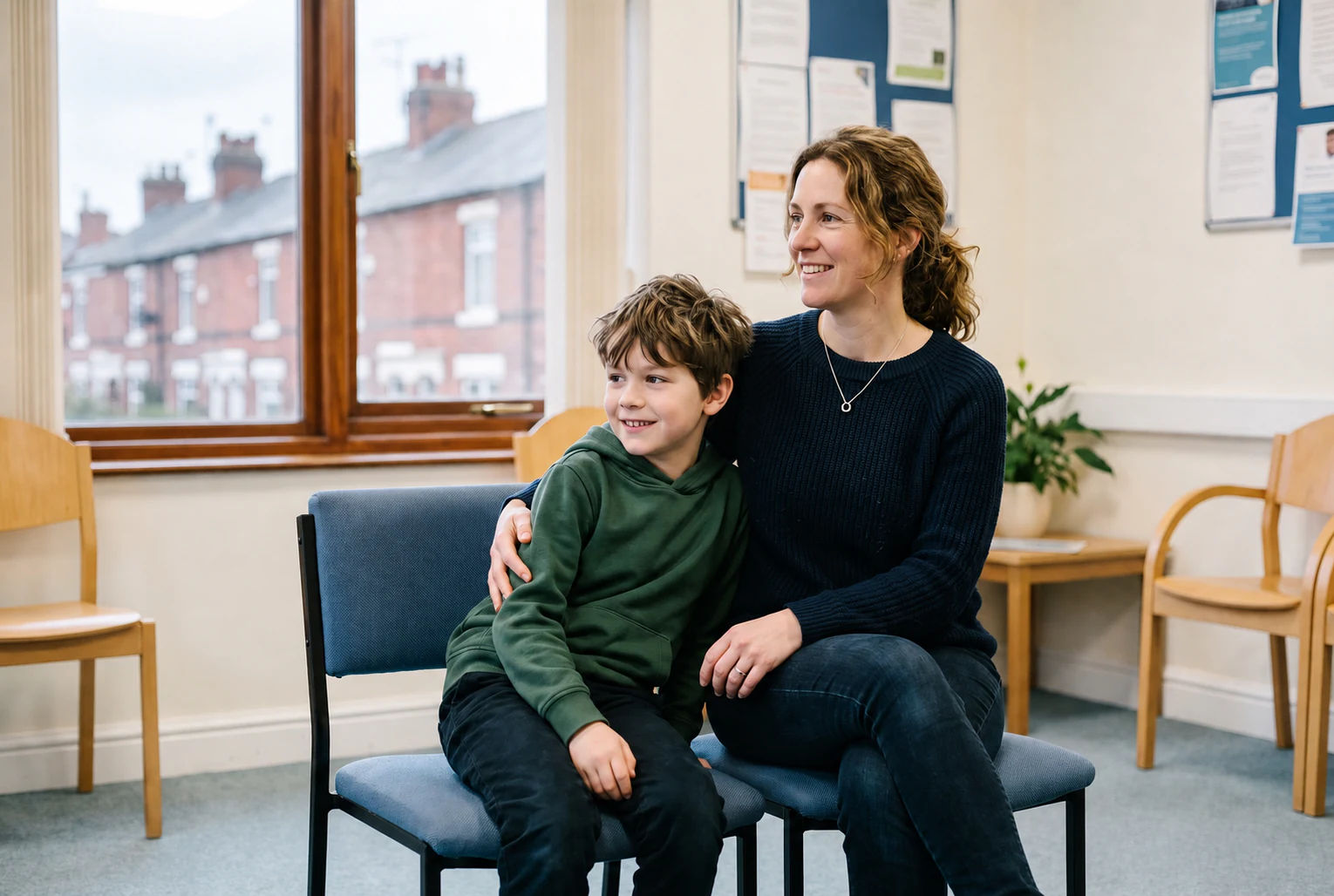
They can sit on your knee
Small children can often sit on a parent's or carer's knee during their appointment.
-
A quick look
At the first visit, we usually check your child's teeth and talk with you about brushing.
-
A sticker on the way out
We offer a sticker at the end of the visit.
Some children are not ready to open their mouth at the first visit. Meeting the team can still help them become familiar with the practice. We will discuss when they should come back.
Check-ups
What happens at a child's check-up
At a check-up, we assess your child's teeth, gums and dental development.
We check how baby and adult teeth are developing and how the teeth meet as the jaw grows. We also look for early signs of dental problems.
Most children come every six months. Your dentist will suggest a different gap if your child needs one.
If treatment is needed, we explain it to you and your child in words they can understand.
We also look at
- The teeth that have come through, and whether any are starting to decay
- The gums, and whether brushing is reaching everywhere
- Brushing, and what is being drunk between meals
Preparing your child
Three things that help before you come
How you talk about the dentist at home makes a big difference to how your child feels.
-
Talk about it as something ordinary
Describe the visit simply: the dentist will look at their teeth, and the chair goes up and down. If they ask whether it will hurt, say that the dentist will explain everything first and they can ask anything.
-
Keep it low-key
Keep the visit calm and matter-of-fact, rather than building it up as a big event.
-
Let them do the talking
Encourage your child to ask questions and tell us about their brushing routine.
Tell us when booking if your child feels anxious, has had a difficult dental visit or has additional needs. This helps us plan the appointment and allow enough time.
Common questions
Questions parents ask
When should my child first see a dentist?
As soon as their first teeth appear. The visit helps us check their teeth and introduce them to the practice.
Is dental treatment free for children?
A first assessment for a child new to the practice is £99.99, and our published private fees apply after that. NHS dental care is free for under-18s, subject to availability.
How often should they come?
Most children come every six months, and under-18s are seen at least once a year under NICE guidance. Your dentist will set the gap for your child.
My child is frightened. What can you do?
Quite a lot. We allow more time, explain what we will use before we use it, and work at a pace your child can manage.
My child has knocked a tooth out. What do I do?
Ring us straight away, and ring 111 if we are closed. If it is an adult tooth, pick it up by the white crown and not the root. Rinse it gently if it is dirty, then try to put it back into the socket and bite on a clean cloth to hold it there.
If you cannot put an adult tooth back, keep it in milk and seek urgent dental care. Do not put a baby tooth back into the socket, as this could damage the adult tooth underneath.
Book your child in
We have looked after Crewe's families from Hungerford Road since 1982. Request an appointment or ring reception, and we will come back to you with a time. If your child is in pain today, ring rather than send the form.