Dentures
Dentures in Crewe
Dentures are removable replacements for missing teeth. A full denture replaces all the teeth in an upper or lower jaw, while a partial denture replaces one or more missing teeth and fits around your remaining natural teeth.
Private dentures start from £750 for a partial denture and from £890 for a full denture. If you receive NHS care, dentures are provided under the NHS where clinically necessary and remain subject to eligibility and current availability.

Your options
Types of dentures
Which option is appropriate depends on how many teeth are missing and the condition of your gums and jawbone.
-
All teeth missing
Full dentures
A full denture replaces all the teeth in an upper or lower jaw. It rests on the gums and can be removed for cleaning.
from £890starting fee
-
Some teeth missing
Partial dentures
A partial denture replaces one or more missing teeth. It rests partly on the gums and may use clasps or other features around your remaining natural teeth to help hold it in position.
from £750starting fee
-
A denture that moves
Implants to help hold a denture
Implants placed in the jaw can help hold a removable denture more securely using special attachments. The denture can still be removed for cleaning.
How implants work
Dentures are made and fitted over a series of appointments, and adjustments may be needed as you get used to them. Your dentist will explain which option is suitable for you, what it involves and the cost before any treatment begins.
The process
How a denture is made
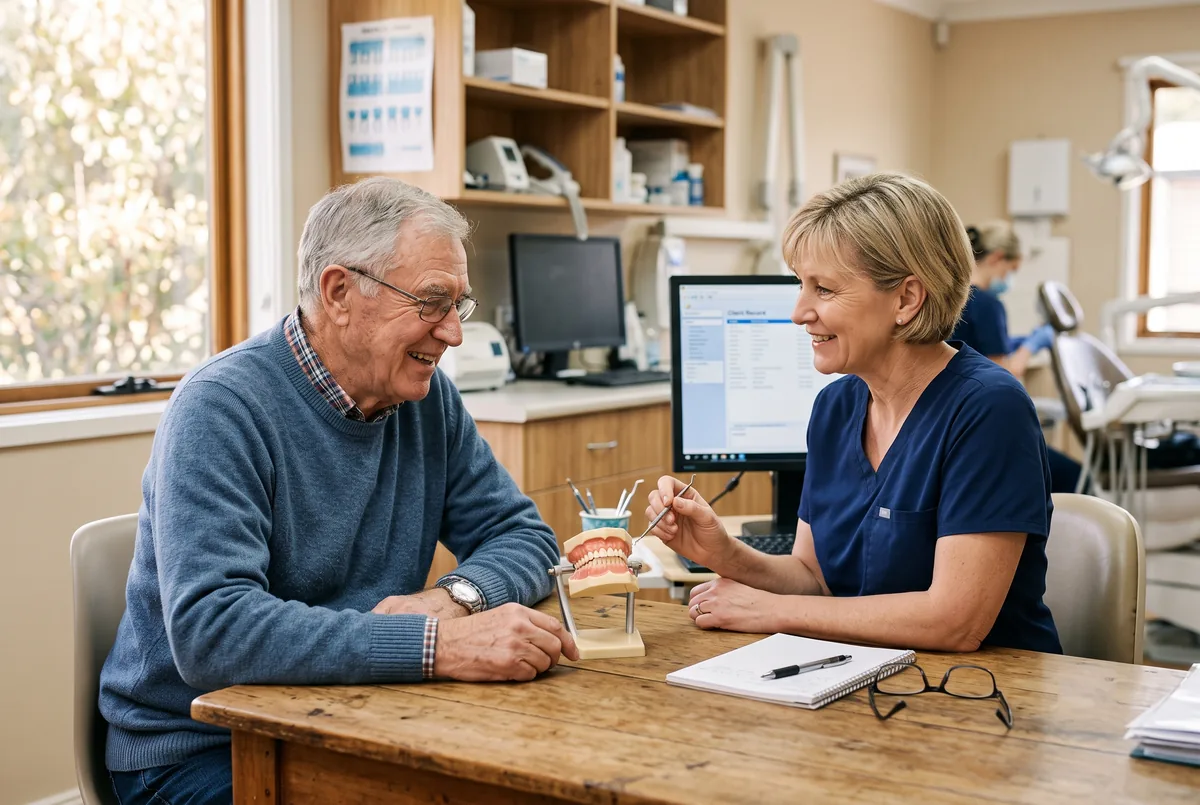
Conventional dentures are usually made over several appointments so their fit, bite and appearance can be checked. The exact stages and number of visits vary, and immediate dentures may follow a different process.
-
Assessment and impressionsYour dentist examines your mouth, discusses what you want the denture to achieve and takes impressions or digital scans of your gums and any remaining teeth.
-
Recording how you biteA further appointment records how your upper and lower jaws meet, so the teeth can be set in the right position for you.
-
Trying it inFor many conventional dentures, you will try a version with the teeth set in wax. This allows the appearance and bite to be checked while changes can still be made.
-
FittingThe finished denture is fitted and checked against your bite. Small adjustments may be made during the appointment.
-
Settling in and reviewNew dentures can take time to get used to, and sore areas can sometimes develop. If your denture causes pain or rubbing, contact us so its fit can be checked and adjusted where appropriate.
Common questions
Denture questions
The things people most often ask about living with a denture.
How much do dentures cost?
A partial denture starts from £750 and a full denture from £890. These are starting fees, so the figure for your treatment is confirmed in a written plan after your assessment. The full list is on our private fee page.
How long does it take to get used to a new denture?
It can take a few weeks. It may help to practise taking the denture in and out, and to eat softer foods until you are comfortable returning to your usual diet.
How should I clean my dentures?
Remove them and brush them with soft soap or washing up liquid every morning and evening, and rinse them in cold water after meals to remove loose food. Do not use toothpaste, as it can damage them.
Should I take my dentures out at night?
Do not wear your dentures overnight unless your dentist recommends it. Leaving them in can trap food against the gums and carries a risk of choking.
What if my denture becomes loose or uncomfortable?
Contact the practice so the fit can be checked. Dentures can loosen over time as the gums and jawbone change shape, and they can become worn or damaged. A denture fitted immediately after extractions often needs adjusting or replacing within the first year, because the mouth changes shape as it heals.
Can implants help hold a denture in place?
Implants placed in the jaw can help hold a removable denture more securely using special attachments, and the denture can still be removed for cleaning. Suitability depends on a clinical assessment. See dental implants for how they work.
Request a denture assessment
Request an appointment and our team will help arrange a suitable visit. If you already wear a denture, bring it with you so your dentist can assess its fit and condition alongside your mouth and remaining teeth. If your denture is causing pain or rubbing, please call us rather than waiting for a form response.