Composite bonding
Composite bonding in Crewe
Composite bonding uses tooth-coloured resin to repair chips, close small gaps or reshape worn teeth. Your dentist shapes it directly on the tooth and hardens it with a special light.
Often completed in one appointment, with little or no removal of tooth structure. It starts with an assessment, £99.99 if you are new to the practice or £59.99 if you already come to us, and your dentist gives you a price for the bonding at that visit.
What it is for
What composite bonding can fix
Bonding can repair small areas of damage or change a tooth's shape.
-
A chipped corner
Bonding can rebuild a chipped edge on a front tooth.
-
Edges worn flat
Grinding wears the edges of front teeth short. Once your dentist has checked what is causing the wear, bonding can build the edges back up.
-
A gap you dislike
A small space at the front can be narrowed by widening the teeth on either side of it.
-
An uneven tooth shape
A tooth that is a slightly different shape from its neighbours, or sits a little behind them, can be built up to match. Bonding changes how a tooth looks, not where it sits.
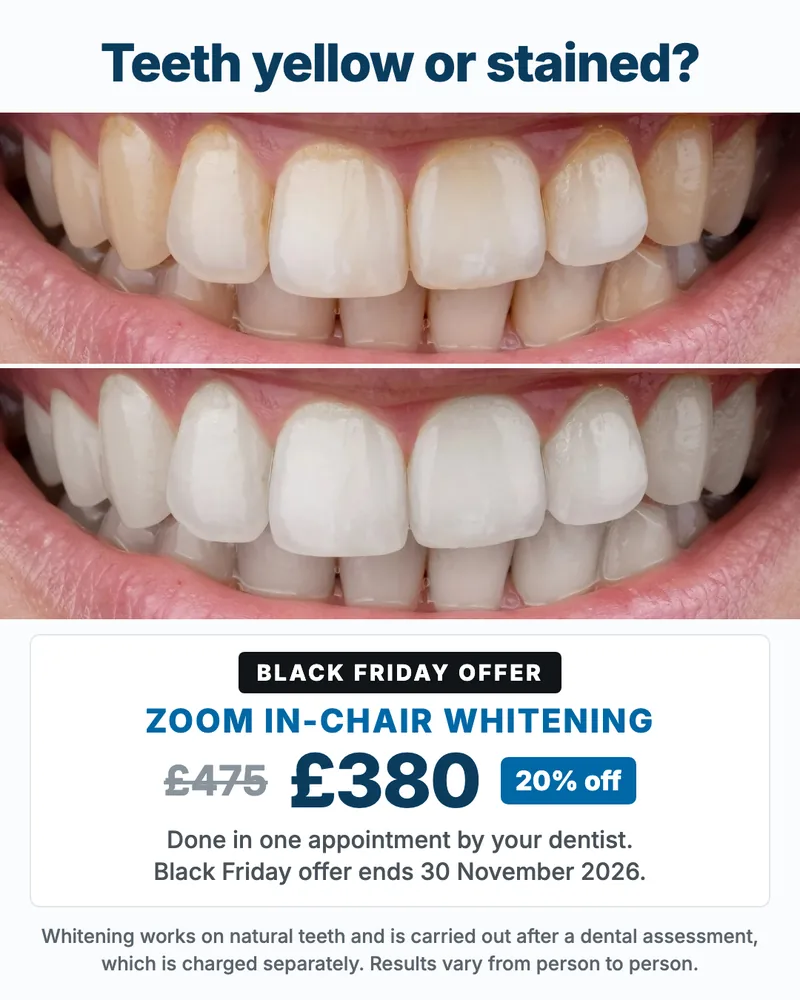
If it is mainly the colour of your teeth you would like to change, ask your dentist about whitening or porcelain veneers as well. Porcelain resists staining better than composite.
What happens
What happens on the day
Bonding is usually shaped directly on the tooth, without laboratory work or a temporary restoration.
-
Agreeing the shape
You show your dentist what bothers you, and together you agree what composite can do. If another treatment would suit you better, your dentist will say so.
-
Matching the shade
Composite comes in a range of shades. Your dentist chooses one to match your teeth, using daylight where possible.
-
Building it up
The tooth surface is prepared so the composite bonds to it. The composite goes on in thin layers, and each layer is hardened with a special light.
-
Shaping and polishing
Your dentist shapes and polishes the composite, then checks your bite.
Bonding is often done without an injection, when nothing needs drilling and the tooth is not sensitive. If you would rather be numbed, just tell your dentist.
Living with it
Caring for your bonding
Composite needs regular care, just like natural teeth.
Composite can stain, particularly around the edges. Tea, coffee, red wine and smoking are the usual causes. Surface staining can usually be polished away at a hygiene visit.
Composite can chip, especially if you grind your teeth or bite hard objects. Small chips can often be repaired without replacing all the bonding.
A quick polish or a small repair now and then keeps it looking its best.
Making it last
- Keep up your check-ups, so wear is spotted before it becomes a break
- Ask your dental team when the bonding needs polishing
- Cut down on the things that stain, especially in the first couple of days
- If you grind your teeth, ask your dentist whether a night guard would help
- Avoid opening packets with your teeth
Common questions
Composite bonding questions
How much does it cost?
The cost depends on how many teeth are involved and the work each needs, so your dentist gives you a price after an assessment: £99.99 for new patients, £59.99 for existing patients. Your dentist will check it suits you at the assessment, and results vary from person to person.
How long does it last?
Several years is usual. How long depends on your bite, your habits and how well it is looked after, and it will need the odd polish or small repair along the way.
Will it match my other teeth?
Your dentist chooses a shade to match your teeth. If you are considering whitening, discuss this before bonding because composite does not whiten.
Does it damage the tooth?
Usually little or none of the tooth is removed. The surface is prepared so the composite bonds to it, and your dentist tells you beforehand if your tooth needs anything more than that.
Can it be taken off again?
Sometimes, yes. Removing composite can affect the tooth surface underneath, so ask your dentist what removal would involve for your tooth.
Should I have bonding or veneers?
Bonding is built up on the tooth, usually in one visit, and keeps the tooth largely as it is. Porcelain veneers take two or three visits, involve removing a thin layer of enamel, and hold their colour for longer. Your dentist will say which suits your teeth.
Compare bonding and veneers, or see all our cosmetic treatments.
Ask about composite bonding
Book an assessment to talk through the tooth or teeth you would like to change. You get the cost in writing before anything starts.