
Dental implants
Dental implants in Crewe
If you are missing one or more teeth, or your denture moves when you eat or speak, dental implants may support a crown or bridge, or help to stabilise a denture. They are not suitable for everyone, so a clinical assessment is needed to understand the options available to you.
Your first visit is an assessment, not a commitment. You can discuss your concerns and treatment options with the implant dentist. If implant treatment is suitable, you will receive a written plan outlining the proposed treatment and likely costs before deciding whether to proceed.

Is it right for you
Is a dental implant right for you?
Suitability depends on the health of your mouth, the available bone, your general health, your habits and what you want treatment to achieve. A clinical assessment and appropriate imaging are needed before an implant can be recommended.
An implant may be an option if
- You are missing a single tooth and want to explore a fixed replacement supported by an implant
- You have several missing teeth and want to explore whether an implant-supported bridge could be an alternative to a removable denture
- Your denture moves when you eat or speak and you want to explore whether implants could help hold it more securely
- One or more teeth cannot be restored and you need to consider the available replacement options
- A tooth may need to be removed and you would like to discuss replacement options before the extraction
What we check before recommending one
- The health of your teeth and gums. Active decay, gum disease or infection usually needs to be addressed before implant treatment.
- The available bone and the position of nearby structures. Clinical examination and appropriate imaging help determine what may be possible.
- Your general health and any medication you take, because these may affect treatment planning and healing.
- Whether you smoke. Smoking can increase the risk of healing problems and implant failure.
- How the implant and replacement tooth would be cleaned and maintained over the long term.
If implant treatment is not suitable, or something needs attention first, we will explain why. Alternatives may include a bridge, a denture or leaving the space untreated. You will have time to consider the recommendation and proposed costs before deciding whether to proceed.
The process
What implant treatment involves
Implant treatment is planned in stages and often takes several months. The exact sequence and timing depend on your mouth, the treatment being provided and whether any preparatory care is needed.
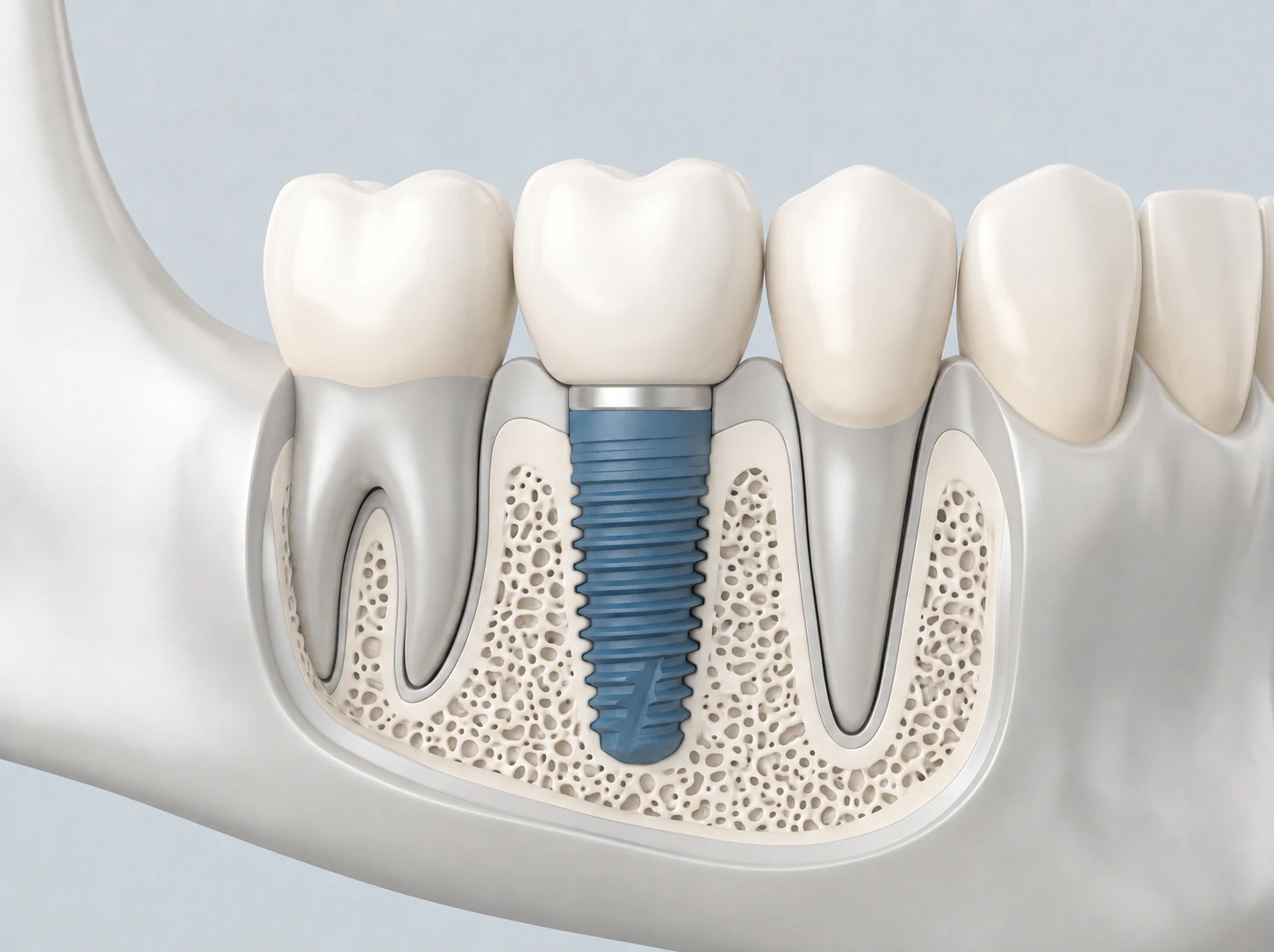
An implant is a small post, usually titanium, placed in the jawbone. Once it has healed, it can support a crown, a bridge or an attachment that holds a denture.
-
Assessment and planningYour teeth, gums and bite are examined and your medical history is reviewed. X-rays or other imaging may be recommended where clinically required. You will receive a written plan explaining the proposed treatment and likely costs.
-
Preparing the site, if it is neededSome people need treatment before an implant can be placed, such as gum treatment, removing a tooth that cannot be kept, or building up bone where there is not enough. Anything needed is explained in advance.
-
Placing the implantThe area is numbed with local anaesthetic before the implant is placed in the jawbone. Stitches may be used while the gum begins to heal. Sedation is available if you find treatment difficult, so tell us at the assessment and we can discuss whether it would be appropriate for you.
-
Healing and fitting your replacementThe implant usually needs time to integrate with the surrounding bone, although healing time varies. When the implant is clinically ready, the planned crown, bridge or denture attachment can be made and fitted.
-
Review and ongoing careWe review the implant after fitting and during your regular appointments. The implant itself cannot develop tooth decay, but the gum and bone around it still require careful maintenance. Effective cleaning at home and ongoing professional care are important for its long-term health.
Timescales differ for everyone. Healing depends on your own biology, the site being treated and whether any preparatory work is needed. Your dentist will give you a realistic timeframe for your own case rather than a general one.
Who you will see
Meet your dental implant team in Crewe
Implant treatment at Allen House Dental is provided by two dentists. You will meet the one who would carry out your treatment at the assessment, before any plan is agreed.
-
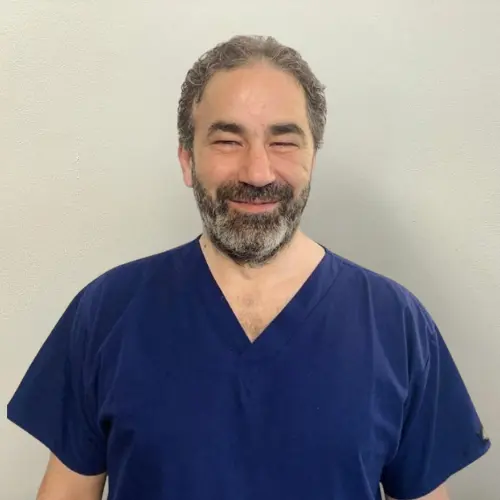
Implant and Cosmetic Dentist
Dr Aiman Sinjab
- Lek Dent, Katowice, Poland, 1996
- GDC 107357
Dr Sinjab provides implant treatment alongside crown and bridge work. He qualified in Poland in 1996 and moved to the UK in 2007 for advanced training, including postgraduate study in cosmetic and restorative dentistry at UCL. He explains each stage of more complex treatment in clear, straightforward language.
-

Visiting Implant Dentist
Dr Uzman Ul-Haq
- BDS, London, United Kingdom, 2003
- MFDS, Royal College of Surgeons of England, 2006
- GDC 82296
Dr Ul-Haq visits Allen House Dental to provide implant treatment, including cases needing bone grafting or a full arch. He has placed implants since 2006 and is a Fellow of the International Congress of Oral Implantologists.
Every dentist here is registered with the General Dental Council. You can check any registration on the GDC register, or read more about everyone on our meet the team page.
Common questions
Dental implant questions we are asked most
Straight answers to the things people ask before booking an assessment. If yours is not here, call us and ask.
How much do dental implants cost?
A single dental implant with a crown currently starts from £2,500, subject to assessment. The total cost depends on how many implants are required, the type of replacement teeth and whether preparatory treatment such as bone grafting is needed. After your assessment, you will receive a written treatment plan and cost estimate before deciding whether to proceed. You can also view our current private dental fees.
Is having a dental implant placed painful?
Local anaesthetic is used to numb the area during implant placement. You may feel pressure or movement, but the aim is to keep you comfortable throughout the procedure. Some soreness, swelling or bruising afterwards is common while the area heals. Your dentist will explain what to expect and how to manage it.
How long does implant treatment take?
Treatment is carried out in stages over several months rather than in a single visit. The implant needs time to integrate with the bone before the replacement tooth is fitted, and how long that takes varies from person to person. Your dentist will give you a timeframe for your own case at the planning stage.
How long do dental implants last?
There is no guaranteed lifespan. How long an implant lasts depends on the health of the gum and bone around it, how well it is cleaned at home, whether you smoke and your general health. Regular check-ups and hygiene appointments are an important part of looking after one.
Is there an age limit for dental implants?
There is generally no fixed upper age limit for dental implants. What matters more is the health of your gums and jawbone, your general health and any medication you take. Implants are not usually placed in younger patients until jaw growth is complete.
What if I do not have enough bone for an implant?
Having limited bone does not automatically rule out implant treatment. Your dentist will assess the area and may recommend imaging where clinically appropriate. Bone grafting may sometimes be considered before or alongside implant placement; in other cases, a different treatment option may be more suitable. Any additional treatment and costs will be explained in your written plan.
Still deciding? Call us on 01270 581024 and ask whatever you like. There is no obligation to book anything.
Find out whether an implant is right for you
Book an assessment and you will meet the implant dentist, talk through your options and receive a written plan with costs. There is no obligation to go ahead.