
Root Canal Treatment in Allen House Dental Ipswich
Toothache, sensitivity, or swelling can be worrying. Root canal treatment can be indicated to relieve pain and help save damaged natural teeth rather than remove them. At Allen House Dental Ipswich, we provide careful, gentle, and evidence-based root canal treatment using modern techniques, with your comfort and long-term oral health our utmost priority.
Book Your Consultation
Location
51 Berners Street, Ipswich, Suffolk IP1 3LN
Available
Monday – Friday, 9:00am – 1:00pm, 2:00pm – 5:00pm
We welcome patients from Ipswich, Suffolk, Woodbridge, Kesgrave, Martlesham, Felixstowe, and around Christchurch Park for calm, professional endodontic treatment.
What Is Root Canal Treatment?
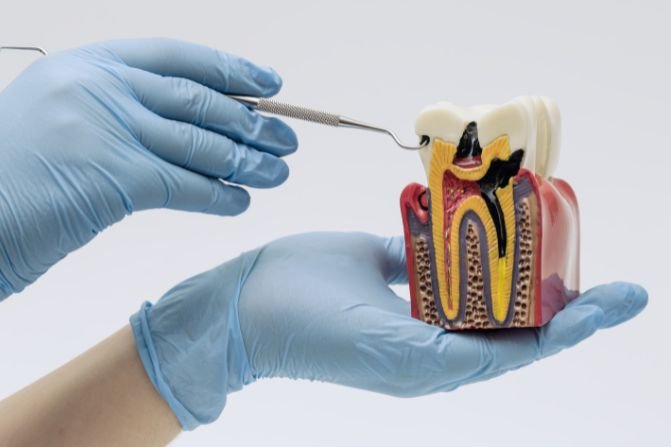
Root canal treatment (also called endodontic treatment) is used when the soft tissue inside a tooth (the pulp) becomes infected or inflamed. This can happen due to:
Deep decay
Cracked or broken teeth
Trauma to the tooth
Repeated dental procedures
An infection at the tip of the root
It is a procedure in which your dentist will remove the infected pulp, thoroughly clean and disinfect the inside of the tooth, and fill the tooth’s interior with an inert material.
Signs You May Need a Root Canal
A root canal procedure is needed when the pulp tissue inside the tooth becomes irreversibly inflamed. While pain is a common warning sign, not everyone will experience obvious symptoms. The following signs may indicate that you may require root canal treatment:
Persistent toothache
A continuous, throbbing, or deep-seated pain that may come and go, or worsen over time. This type of pain often suggests inflammation or infection inside the tooth or at the tip of the root.
Pain when biting or chewing
Discomfort when applying pressure to a tooth can indicate irritation or damage to the pulp or surrounding tissues.
Sensitivity to hot or cold that lingers
A short, sharp sensitivity of the teeth when consuming hot or cold foods and drinks can be normal. However, if the sensation persists for several seconds or minutes after exposure, it may indicate pulp damage and may require root canal treatment.
Swelling of the gum or face
Swelling near a tooth or more widespread facial swelling can be a sign of infection and should be assessed promptly.
Darkening or discolouration of a tooth
A tooth that becomes darker than others may indicate reduced blood supply or damage to the pulp.
Pimple-like bump on the gum
This may be a dental abscess, allowing infection to drain. Even if painless, it still requires professional evaluation.
While many patients with an inflamed dental pulp experience pain and gum swelling, some infected teeth don’t cause any noticeable symptoms. In such cases, routine dental examinations and X-rays are helpful in the timely detection and treatment. Our dentist will assess your individual situation and discuss whether root canal treatment is suitable for you.
What Happens During Root Canal Treatment?
Root canal treatment is carried out in a series of carefully planned steps to remove infection and protect the tooth while keeping you as comfortable as possible:
Assessment & X-rays
Our dentist will examine the affected tooth and take X-ray images. This will allow them to confirm the diagnosis of an inflamed dental pulp and prepare a customised treatment plan.
Local anaesthetic
If our dentists determine that you require a root canal treatment, we will begin the procedure by administering a local anaesthetic. This will numb the area around the tooth, keeping you comfortable and pain-free during your treatment.
Cleaning the canals
Next, our dentists will use special instruments to remove the infected or inflamed pulp tissue from inside the tooth.
Disinfection & shaping
Once the inflamed pulp has been thoroughly removed, we will wash the tooth’s interior and the root canals (the hollow spaces inside the roots) and disinfect them. Afterwards, we will use special instruments to taper them.
Filling & sealing
We will then fill the shaped root canals with a biocompatible material. This will help seal the root canals and prevent reinfection. This process is called obturation.
Restoration
Once the root canals have been sealed, we will place a temporary filling material over them. It will be replaced with a permanent filling once optimal healing has occurred. Sometimes, we will also place a crown over the back teeth after a root canal. The reason is that teeth become brittle following root canal treatment as they have lost their blood and nerve supply. Therefore, they are reinforced with dental crowns.
A root canal treatment procedure is typically completed in two or three visits, depending on the complexity of the case. However, in some cases, dentists may perform the procedure in a single sitting. However, such single-sitting procedures are not performed routinely.
Benefits of Root Canal Treatment
Root canal treatment aims to remove infection from inside the tooth and support long-term oral health. When appropriate, it can offer the following benefits:
Relieves dental pain
By removing inflamed or infected pulp tissue, root canal treatment can significantly reduce or eliminate the pain associated with tooth infection.
Removes infection
Cleaning and disinfecting the root canals helps control bacteria and reduces the risk of the infection spreading to surrounding teeth or bone.
Preserves your natural tooth
Saving your own tooth is often preferable to extraction, helping maintain the natural structure of your mouth.
Restores normal chewing function
After treatment and restoration, the tooth can be used comfortably for biting and chewing.
Helps prevent further dental problems
Treating infection early can lower the risk of abscess formation, bone loss, and the need for more complex procedures in the future.
Our dentist will explain whether root canal treatment is suitable for your tooth and discuss all available options so you can make an informed decision.
Price of Root Canal Treatment
At Allen House Dental Ipswich, the cost of root canal treatment typically ranges from £395.00 to £695.00, depending on the tooth's position and the complexity of the case. The exact fee depends on the tooth involved (front tooth, premolar, or molar), the number of root canals, and the complexity of the treatment required.
Following a clinical examination and any necessary X-rays, our dentist will provide a personalised treatment plan along with a clear explanation of the costs before treatment begins. This ensures you are fully informed and able to make a confident decision about your care.
Root Canal Treatment vs Tooth Extraction
In many situations, saving your natural tooth with root canal treatment is preferable to removing it. Keeping your own tooth helps maintain normal biting and chewing function and supports the health of the surrounding jawbone.
However, if a tooth is severely damaged or cannot be saved, we will recommend extracting it and replacing it with a suitable prosthesis. In these cases, we will discuss suitable tooth replacement options with you, such as dental implants, bridges, or dentures. Our dentists will help you select a tooth replacement option that best suits your budget and dental needs.
Why Choose Allen House Dental Ipswich?
Choosing the right dental practice is an important decision.
We focus on providing high-quality care in a supportiveand professional environment
Experienced clinicians
Our team has experience providing a wide range of dental treatments, including root canal treatment with contemporary instruments and evidence-based techniques.
Modern equipment and techniques
We use up-to-date technology to support accurate diagnosis and effective treatment planning.
Gentle, patient-focused approach
We understand that dental visits can be daunting for some patients, and we aim to provide care in a calm, respectful, and reassuring manner.
Clear explanations and transparent fees
Our dentists will explain your treatment options, expected outcomes, and costs before treatment begins, so you can make informed choices.
Clear explanations and transparent fees
Our practice is easy to reach for patients in Ipswich and surrounding areas.
If you would like to discuss your concerns or book an appointment, we are here to help.
Frequently Asked Questions
How long does a root canal take?
Most single-sitting root canal appointments last about 60–90 minutes. Some complex cases may require more than one visit. Our dentist will advise you in advance if multiple appointments are likely to be needed.
How long does a root-treated tooth last?
With good oral hygiene and a suitable restoration (often a crown), many root-treated teeth can last for many years. Longevity varies between individuals depending on factors such as bite forces, oral care routine, and overall dental health. Our dentist will advise on how best to look after your treated tooth.
Will I need a crown after root canal treatment?
Often yes, particularly for back teeth, which are subjected to higher chewing forces. After root canal treatment, teeth can become more brittle, and a crown helps restore strength and reduce the risk of fracture. Our dentist will assess whether a crown is recommended in your case.
Can infection return after a root canal?
Reinfection is uncommon but possible. This may happen if bacteria re-enter the tooth or if complex canal anatomy is present. Regular dental check-ups allow our dentist to monitor the teeth and detect any issues early.
Is there an alternative to root canal treatment?
The main alternative to a root canal procedure is tooth extraction. Our dentist will explain all available options, along with the advantages and disadvantages of each, so you can make an informed choice.
Can I drive home after treatment?
Yes, you can usually drive home after root canal treatment, as it is typically carried out under local anaesthetic. If sedation has been used, our dentist will advise you about aftercare and transport arrangements.
Are There Any Risks with Root Canal Treatment?
Yes. As with any dental procedure, root canal treatment carries some potential risks. These may include temporary post-treatment discomfort, rare reinfection, or fracture of a heavily weakened tooth.
Our dentist will explain the possible risks, benefits, and alternative treatment options before starting care, so you can make an informed decision that is right for you.
Is Root Canal Treatment Painful?
Root canal treatment is usually carried out under local anaesthetic, which helps numb the area and keep you comfortable. With modern techniques, most patients find the procedure no more uncomfortable than having a routine filling.
Some mild tenderness or sensitivity after treatment is normal and typically settles within a few days. Our dentist will provide aftercare advice to help manage any temporary discomfort.
Do you have a question?
We Can Assist You Fill The Form Below
Direction