Dentures
Dentures in Ipswich
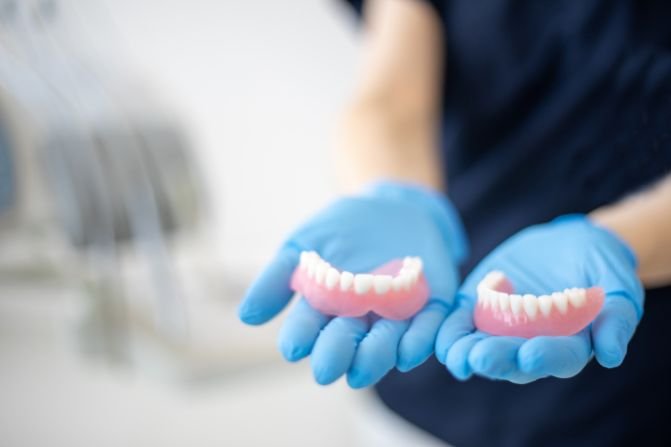
Dentures are removable replacements for missing teeth. They can replace one or more teeth, or a full upper or lower set, and each one is made to fit your mouth by a dental laboratory.
Acrylic dentures from £850 per denture (upper or lower), chrome dentures from £1,000. Mouthguards for grinding or sport are £180.
The options
Types of denture
Which one suits you depends on how many teeth are missing, how healthy the remaining ones are, and what your gums and jawbone will support.
-
Option one
Acrylic denture
From £850 per denture (upper or lower)
A plate of tooth-coloured acrylic carrying as many teeth as you need, from one to a full set.
- The lower starting price of the two
- Rests on the gums, and a full upper denture covers part of the roof of the mouth
- Teeth can be added to it if you lose more later
-
Option two
Chrome denture
From £1,000
Built on a thin cobalt chrome framework rather than a full acrylic plate. It rests partly on your remaining teeth, so it can be made slimmer and covers less of your palate.
- Thinner, and usually feels less bulky
- Holds onto your remaining teeth with small clasps, so those teeth need to be sound
-
Option three
Implant-retained denture
Quoted after your assessment
A removable denture that clips onto implants in the jaw, which holds it more firmly than a denture resting on the gums alone.
- Clips on and off for cleaning
- The implants are placed first, so treatment is planned over several months
- Any bone graft needed first is planned and quoted separately
A bridge or an implant can also replace missing teeth, and your dentist will tell you at the assessment if one would suit you better. If you are missing most or all of the teeth in one jaw, our full mouth implants page covers the fixed alternatives.
The process
How a denture is made
A dental laboratory makes your denture over several appointments, usually a few weeks apart. The number of visits depends on the type and on how much adjusting it needs.
-
Assessment
Your dentist checks your remaining teeth, gums and bite, and goes through the types that would suit you. Any fillings or extractions needed first are planned at this stage.
-
Impressions
A mould (the impression) or a scan is taken of your jaws, with a record of how your teeth meet. These go to the laboratory that builds the denture.
-
Try-in
You may try a version with the teeth set in wax to check their appearance and bite. This is the time to ask about the shade or shape.
-
Fitting
The finished denture is fitted and adjusted. You are shown how to put it in and take it out, and how to clean it.
-
Adjusting the fit
Short follow-up appointments let your dentist fine-tune the fit while you get used to it. After that, the fit is checked at your routine check-ups.
After the fitting
Getting used to a new denture
Most people settle in within a few weeks. These tips make the first weeks easier.
Your first few weeks
- Start with soft food cut small, and chew on both sides to keep it stable
- Practise reading aloud to help adjust your speech
- Some people notice a spot that rubs at first, and we ease it at a short appointment
Looking after it
- Clean it over a bowl of water or a folded towel, so it is protected if you drop it
- Brush it daily with a denture brush and soap or a denture cleaner; toothpaste is too abrasive for it
- Take it out overnight unless your dentist says otherwise. It gives your gums a rest, and keeping it in water keeps its shape
- Clean your gums, tongue and any remaining teeth as well as the denture
If your denture starts to feel loose or rubs, ring us. Gums change shape over the years, and often a reline, which adds new material to the fitting surface, is all it needs.
Also made for you here
Mouthguards for grinding and sport
We also make mouthguards for grinding and for contact sports, from a mould of your teeth. Either type is £180.
-
For grinding
Night guard for bruxism
A night guard worn while you sleep takes the force of grinding and clenching, so it protects your teeth from wear. Ask for an assessment if you have worn teeth, jaw pain or morning headaches.
-
For sport
Sports mouthguard
Made from a mould of your own teeth, so it fits closely and is comfortable to wear for rugby, hockey, boxing or martial arts.
Mouthguards are made privately here. Ask about one at your next check-up, or when you come in for a denture assessment. The full list is on our private fee guide.
What it costs
What dentures cost in Ipswich
An acrylic denture starts at £850 per denture (upper or lower) and a chrome denture at £1,000. The table shows the fees that usually go with it, from your first appointment onwards.
Private fees
| Acrylic denture, per denture (upper or lower) | from £850 |
|---|---|
| Chrome denture | from £1,000 |
| Mouthguard, for grinding or sport | £180 |
| New patient appointment | £100 |
| Routine examination, if registered here | £65 |
| Simple extraction, where required | from £150 |
Spreading the cost
Membership from £14.75 a month
Three plans cover routine examinations, hygiene appointments or both, and your examination is where the fit of your denture is checked. You can start using your plan's appointments after six monthly payments.
Compare membership plansWorth knowing
When you pay
A denture is made for you by a dental laboratory, so the private fee is paid in full at the appointment where the impressions are taken, rather than when it is fitted.
See the full fee listThe fee is for the denture itself. Any fillings or extractions needed first are quoted separately, and you get the full figure in writing before anything is started. Your dentist will check it suits you at the assessment, and results vary from person to person.
Common questions
Denture questions
What people ask most often before booking. If yours is not here, call the practice and ask.
Will people be able to tell?
Usually not. The teeth are chosen to match the shape and shade of your own, and you can review the look at a try-in where this is part of your treatment.
Do I need denture adhesive?
Usually not, because a well-fitting denture holds by itself. Some people like a little adhesive for extra confidence, particularly with a lower denture. If you find you need more over time, come in and we will check the fit.
How long do they last?
Several years, usually. Fit and wear change over time, and your dentist tells you at your check-ups when a reline, repair or replacement is worth doing, and what it costs.
What if it breaks?
Ring us and we will look at repairing it. Keep the pieces and bring them in: household glues are unsafe in the mouth and make a repair harder. The repair is quoted once we have seen the denture.
Book a denture assessment
Request an appointment at our Berners Street practice. Your dentist examines your mouth and your existing denture, if you have one, then tells you which type suits you, what it costs and what happens next.