REPLACE MISSING TEETH WITH CONFIDENCE
Dental Implants in Ipswich
Replace one missing tooth, several teeth or a complete arch with carefully planned dental implant treatment at Allen House Dental Ipswich. Our implant team uses detailed clinical assessment and 3D CBCT imaging where appropriate to recommend a personalised solution focused on comfort, function and a natural-looking result.

Serving Since 1965

3D CBCT Implant Planning

0% Finance Available

Personalised Patient Care
Replace Missing Teeth with Dental Implants
Living with missing or failing teeth can affect how comfortably you eat and speak, as well as how you feel about your smile. Dental implants offer a long-term way to support replacement teeth when one tooth, several neighbouring teeth or most of the teeth in an arch need to be replaced.
At Allen House Dental Ipswich, every implant treatment begins with a careful assessment. We will listen to what you would like to achieve, examine your oral health and explain the appropriate fixed and removable options. These may include an implant crown, an implant-supported bridge, an implant-retained denture or a fixed full-mouth restoration.
Dental implants are not suitable for everyone. A clinical examination and diagnostic assessment are required before treatment can be recommended. We will also explain reasonable alternatives so that you can make an informed decision without pressure.
UNDERSTANDING DENTAL IMPLANTS
What Are Dental Implants?
A dental implant is a small screw or post, usually made from titanium, that is surgically placed in the jawbone. It acts as a foundation for a replacement crown, bridge or denture.
After placement, the surrounding bone heals closely around the implant through a process called osseointegration. Once sufficient healing has taken place, the implant can support the replacement tooth or teeth planned for your case.
Dental implants may be used to support:
A crown for one missing tooth
A bridge for several missing teeth
An implant-retained removable denture
A fixed full-arch restoration
Dental implants can replace missing tooth roots and support crowns, bridges or certain types of dentures. They require careful planning, effective daily cleaning and ongoing professional monitoring.
IMPLANT OPTIONS
Dental Implant Options Available in Ipswich
The right treatment depends on how many teeth need to be replaced, the health of your gums and remaining teeth, the amount of available bone, your general health and whether you would prefer a fixed or removable restoration.
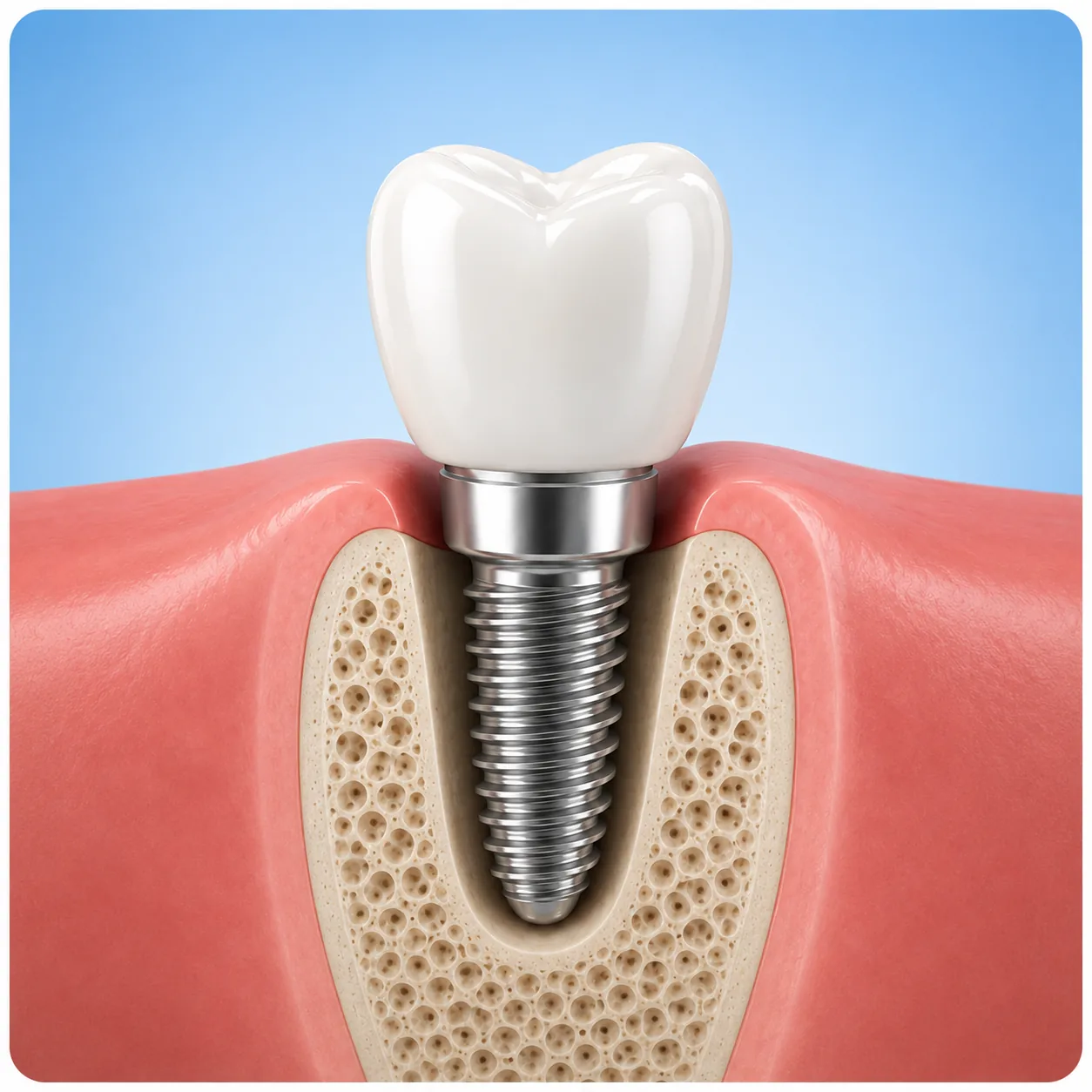
Single-Tooth Dental Implants
A single dental implant can replace one missing tooth without using the neighbouring teeth for support.
The implant is placed in the jawbone and, after the required healing period, restored with a custom-made crown. Its shape, shade and position are planned to complement the surrounding teeth.
Suitable for: Replacing one missing tooth
Restoration type: Fixed crown
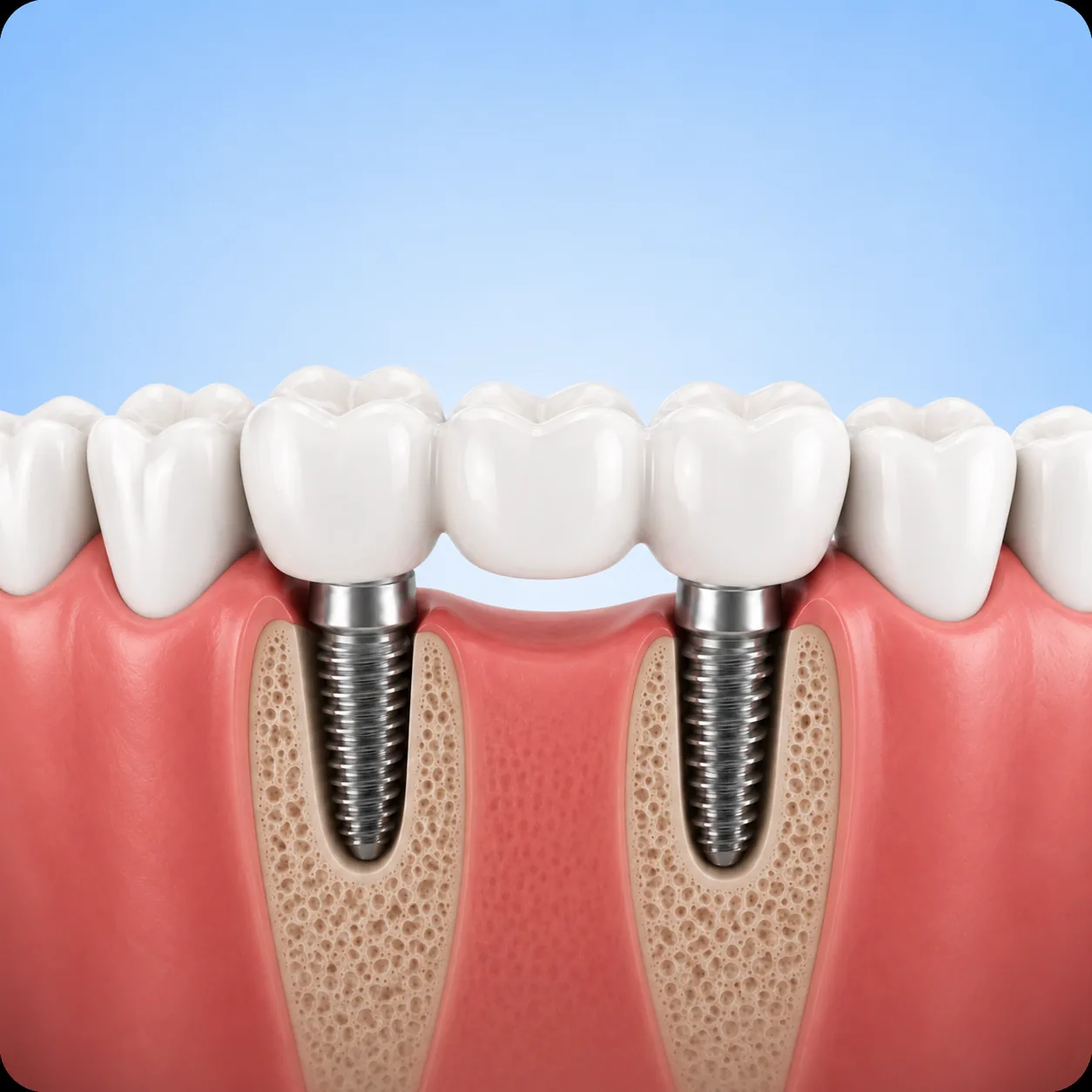
Implant-Supported Dental Bridges
An implant-supported bridge may replace several adjacent missing teeth.
Instead of placing one implant for every missing tooth, two or more implants may be used to support a fixed bridge. The number and position of the implants depend on the location of the gap, the available bone and the forces placed on the restoration.
Suitable for: Several adjacent missing teeth
Restoration type: Fixed bridge
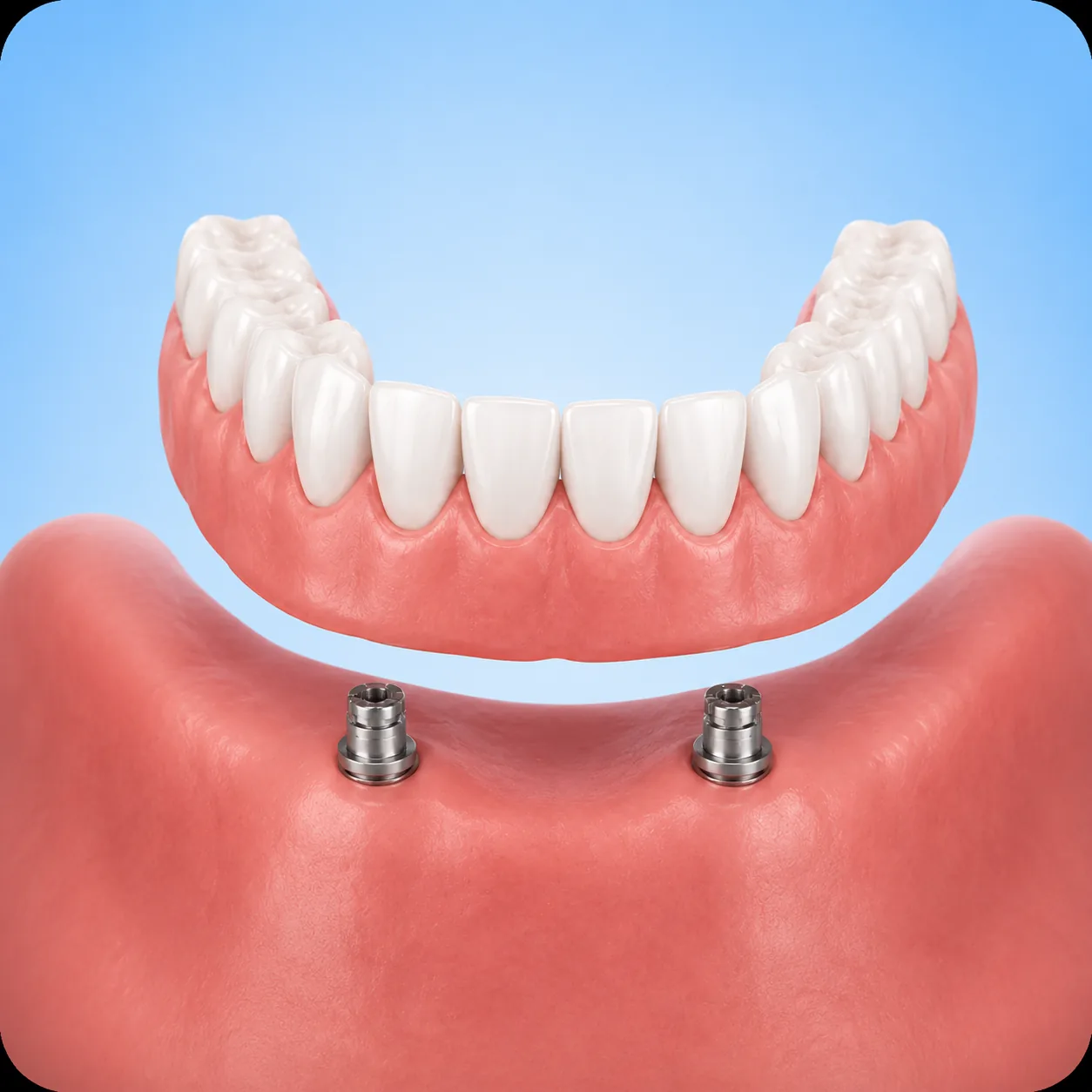
Implant-Retained Snap-In Dentures
Implant-retained dentures are removable dentures held more securely in place by dental implants.
The denture connects to implants using attachment points or a supporting bar. It can still be removed for cleaning, but it usually offers greater stability than a conventional removable denture.
Suitable for: Multiple or complete tooth loss
Restoration type: Removable and implant-retained
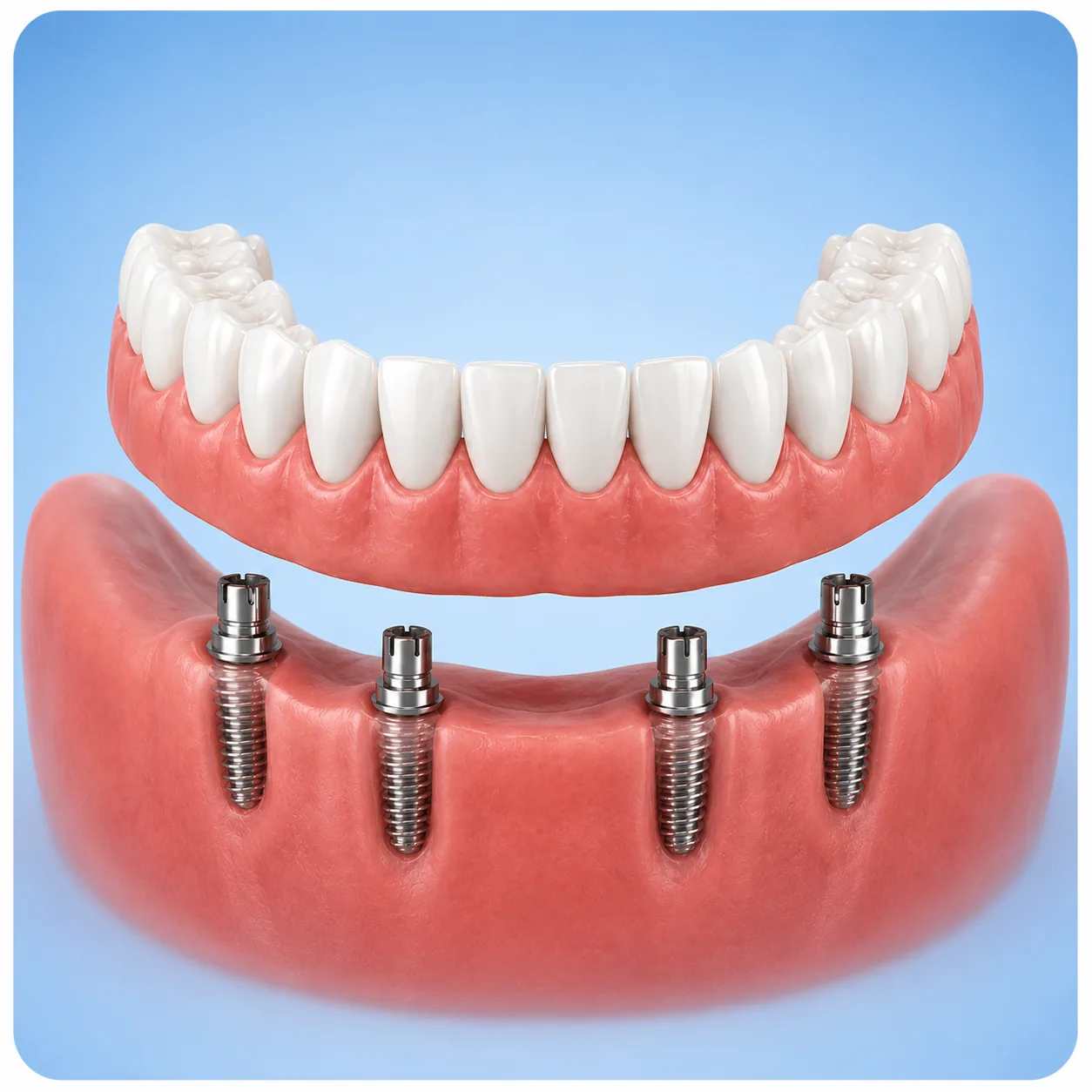
Full-Mouth Dental Implants
Full-mouth or full-arch dental implants may be considered when most or all the teeth in the upper jaw, lower jaw or both jaws are missing or cannot be predictably restored.
A complete arch of replacement teeth is supported by a carefully planned number of implants—often four or six, depending on the individual case. Selected patients may be suitable for a temporary fixed restoration shortly after implant placement. This cannot be promised before assessment, and a modified diet is normally required during healing.
Suitable for: Extensive or complete tooth loss
Restoration type: Fixed full-arch bridge
The final crown, bridge or denture should be planned before implant placement so that the number and position of the implants support the intended result.
THE BENEFITS
What Are the Benefits of Dental Implants?
Dental implants can provide several benefits for clinically suitable patients. However, every tooth-replacement option has advantages, limitations, risks and maintenance requirements that should be explained before treatment.
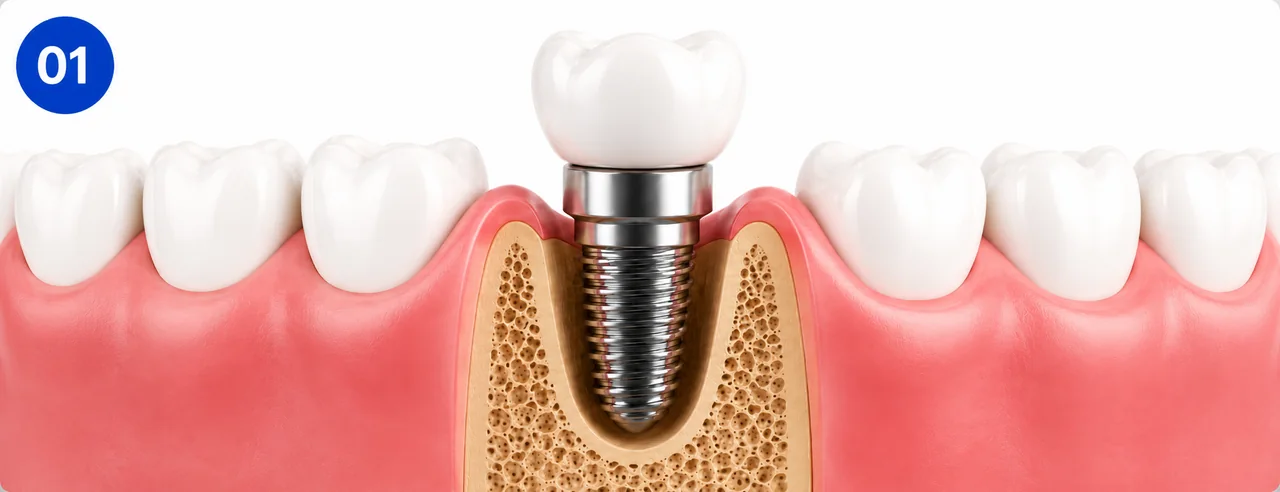
Stable Tooth Replacement
Because implants are anchored within the jawbone, they can provide a stable foundation for fixed crowns and bridges or improve the retention of a removable denture.
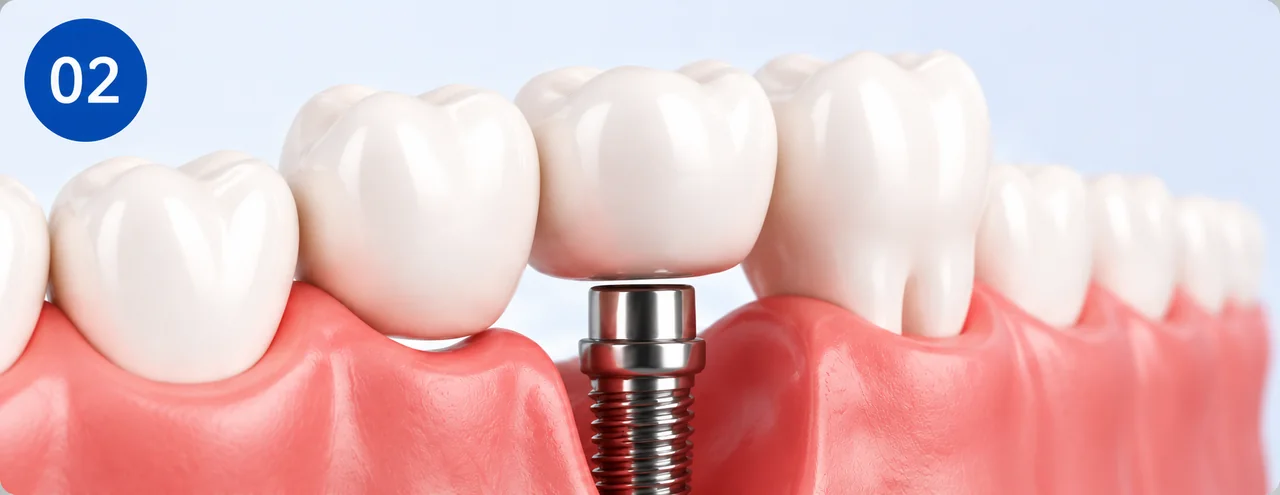
Protection of Neighbouring Teeth
A single implant can often replace a missing tooth without preparing healthy neighbouring teeth, as may be required for some conventional tooth-supported bridges.
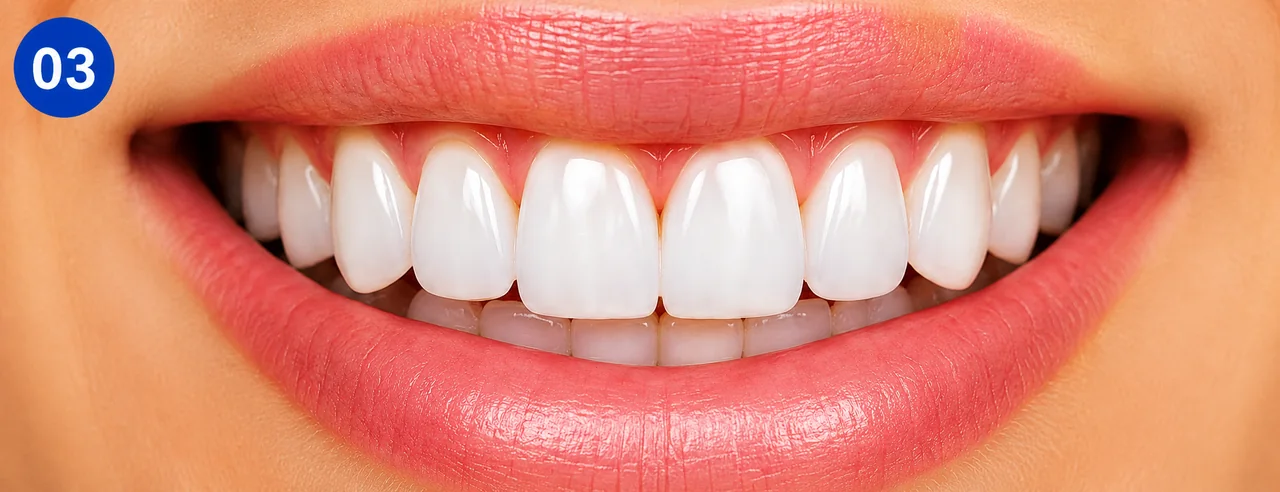
Natural-Looking Restorations
Implant crowns, bridges and dentures are individually planned to complement your remaining teeth, smile and facial proportions.

Support for Chewing
After healing and the fitting of the final restoration, implant-supported teeth may make eating more comfortable and predictable than an unstable removable denture.
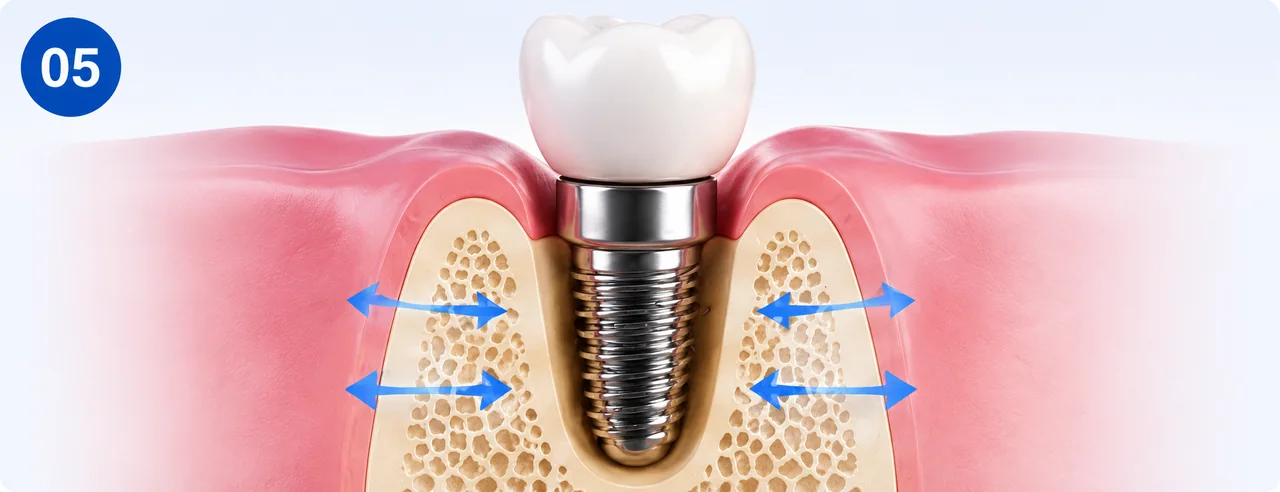
Support for the Jawbone
An implant transfers functional forces into the surrounding bone and may help maintain bone around the implant site. It cannot guarantee that all future bone loss will be prevented.

Long-Term Treatment
Implants can provide long-term tooth replacement when carefully planned, effectively cleaned and professionally maintained. They should not be described as permanent or guaranteed for life.
Dental implants are not appropriate for everyone. Your suitability can only be determined after a clinical assessment and any necessary diagnostic imaging.
Dental Implants, Bridges or Dentures:
Which Is Right for You?
The most appropriate way to replace missing teeth depends on your oral health, preferences, budget and the position and number of teeth being replaced.
| Treatment | Fixed or removable? | Effect on neighbouring teeth | Important consideration |
|---|---|---|---|
| Dental implant | Usually fixed; some implant dentures are removable | Often avoids preparing neighbouring healthy teeth | Requires surgery, healing and suitable oral health |
| Conventional bridge | Fixed | Supporting teeth may need to be prepared | May avoid implant surgery |
| Conventional denture | Removable | Usually requires little or no preparation of other teeth | May move and require periodic adjustment |
There is no single best option for everyone. Your dentist should explain the benefits, risks, likely longevity, maintenance requirements and costs of each suitable treatment. Alternatives may include a conventional bridge, a removable denture or accepting the space.
WHY CHOOSE US
Why Choose Allen House Dental Ipswich for Dental Implants?
Allen House Dental has cared for patients in Ipswich since 1965. Our approach combines careful assessment, digital diagnostics, individual treatment planning and ongoing implant maintenance.

Personalised Treatment Planning
Your treatment plan will reflect your oral health, medical history, available bone, gum condition, bite and personal priorities.
We will explain why a particular option may or may not be appropriate instead of recommending the same treatment for every patient.

3D CBCT Assessment
Where clinically indicated, CBCT imaging provides a three-dimensional view of the jawbone and nearby anatomical structures.
This information can help the clinician assess the available bone and plan the proposed implant position.

Options for Different Levels of Tooth Loss
Treatment options include single-tooth implants, implant-supported bridges, implant-retained dentures and fixed full-mouth restorations.

Clear Explanations and Fees
Before deciding whether to proceed, you will receive information about the proposed treatment, alternatives, expected stages, relevant risks and likely costs.
Ongoing Implant Care
Dental implants require effective daily cleaning and regular professional monitoring. Our team can provide ongoing examinations, hygiene maintenance and advice appropriate for your restoration.

Care at Our Ipswich Practice
Consultations, diagnostic planning and ongoing care are available at Allen House Dental, 51 Berners Street, Ipswich, Suffolk IP1 3LN.
TREATMENT COSTS
How Much Do Dental Implants Cost in Ipswich?
The cost of implant treatment depends on the number of teeth being replaced, the type of restoration, the available bone and whether any preparatory procedures are required.
The prices below are intended as a guide. Your confirmed treatment plan and written estimate will be provided after the necessary clinical assessment and diagnostic planning.
Dental Implant Guide Prices
| Treatment | Guide Price |
|---|---|
| Single dental implant with crown | From £2,500 |
| Bone graft | From £900 |
| Internal sinus lift | From £1,400 |
| External sinus lift | From £2,000 |
| Implant-retained denture | From £7,500 |
| Implant-retained denture supported by a titanium bar | From £12,500 |
| Fixed full-arch implant treatment | From £16,500 |
Your exact treatment plan and confirmed fees will depend on:
The number and position of implants
Your bone and gum condition
Whether bone grafting or sinus treatment is required
The type of final restoration
The complexity of surgery
Any temporary teeth needed during treatment

Finance Options
Finance options, including 0% finance on eligible treatments, may be available subject to status, affordability checks and the applicable terms and conditions.

YOUR FIRST VISIT
The Dental Implant Treatment Process
Your treatment journey will depend on the number of teeth being replaced, the available bone, your oral health and the type of final restoration being planned.
01

Initial Implant Discussion
Your first appointment gives you an opportunity to explain what is concerning you and what you would like treatment to achieve.
We will discuss possible options, answer your initial questions and explain which diagnostic steps may be required.
02
Clinical Assessment
Your dentist will examine your teeth, gums, bite and the area where implant treatment is being considered.
Your medical history, current medication, smoking status and previous dental treatment will also be reviewed because these factors may influence your suitability and treatment plan.
03
Diagnostic Imaging
Digital X-rays, photographs, scans and a CBCT assessment may be recommended where clinically required.
CBCT imaging allows the clinician to examine the jawbone in three dimensions and assess anatomical structures relevant to implant placement.
04
Personalised Treatment Plan
Once the necessary information has been collected, you will receive a proposed treatment plan explaining:
-
The recommended implant treatment
-
Reasonable alternatives
-
Any preparatory treatment that may be required
-
The expected stages and approximate timeline
-
Relevant risks and limitations
-
The proposed fees
You will have time to consider the information and ask questions before deciding whether to proceed.
05
Preparatory Treatment
Some patients need treatment before an implant can be placed. This may include managing active gum disease, removing an unrestorable tooth or rebuilding insufficient bone.
Bone grafting is not necessary in every case.
06
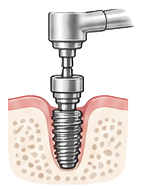
Implant Placement
The treatment area is numbed with local anaesthetic before the implant is placed in the planned position.
Stitches may be used while the area begins to heal. Your dental team will provide personalised instructions about cleaning, diet and managing expected postoperative discomfort.
07
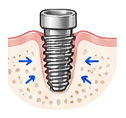
Healing and Integration
The implant is normally allowed time to integrate with the surrounding bone.
Healing time varies and may be affected by the implant location, bone condition, any grafting performed and your general health.
08
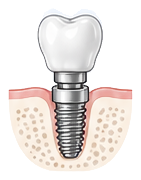
Fitting the Replacement Teeth
After the required healing period, the implant is restored with the planned crown, bridge or denture.
Your dentist will check its appearance, fit and bite and ensure that you understand how to clean around the restoration.
09
Maintenance and Reviews
Your implant and restoration will require daily home care and ongoing professional monitoring.
The complete treatment journey often takes several months. More complex treatment may take longer.

We are with you at every stage of your implant journey.
Our team is here to provide expert care, clear guidance and ongoing support.

Meet Your Implant Dentist
Dr Rohit Patel
Experienced implant dentist

BDS, MSc (Dist.) Clinical Implantology, MSc Advanced Aesthetic and Restorative Dentistry, PgDip Advanced Aesthetic and Restorative Dentistry, MFDS RCSEd
Dr Rohit Patel qualified from King’s College London and has completed advanced postgraduate training in clinical implantology, aesthetic dentistry and restorative dentistry. His MSc in Clinical Implantology was awarded with Distinction.
Dr Patel takes time to understand each patient’s concerns, explain the appropriate treatment options and develop a plan based on the patient’s oral health and long-term needs. His experience includes planning implant treatment and managing more complex restorative and surgical cases.
DENTAL IMPLANTS
Frequently Asked Questions About Dental Implants
Clear answers about implant suitability, treatment, healing, aftercare and the options that may be available at Allen House Dental Ipswich.
Is Dental Implant Treatment Painful?
The treatment area is numbed with local anaesthetic during implant placement. You may feel pressure or vibration, but you should not feel sharp pain during the procedure.
Some soreness, swelling, bruising or minor bleeding can occur afterwards. Your dental team will provide advice appropriate for the treatment you have received.
How Long Does Dental Implant Treatment Take?
Treatment often takes several months because the implant normally needs time to integrate with the surrounding bone before the final crown, bridge or denture is fitted.
The overall timeline depends on healing, the number and position of the implants, the type of restoration and whether grafting or other preparatory treatment is required.
How Long Do Dental Implants Last?
Dental implants are intended as a long-term treatment but are not permanent or guaranteed for life.
Their longevity depends on factors including daily cleaning, gum health, smoking, general health, bite forces and professional maintenance. The crown, bridge or denture attached to an implant may need repair or replacement at a different time from the implant itself.
Can I Have Dental Implants If I Have Bone Loss?
Possibly. Some types of bone loss may be managed with bone grafting, sinus augmentation or a different implant plan.
A CBCT scan may be recommended to assess the available bone and determine which options are clinically appropriate.
Can Smokers Have Dental Implants?
Some smokers may still be considered for implants, but smoking increases the risk of healing difficulties and implant complications.
Your dentist will discuss the individual risks and may recommend stopping smoking before treatment to improve the conditions for healing and long-term implant health.
Can I Have Teeth Fitted on the Same Day?
Selected patients may be suitable for an immediate temporary restoration.
This depends on implant stability, bone condition, the number and position of the implants, the bite and other clinical factors. A soft or modified diet is normally required during healing. Same-day teeth cannot be promised before a full assessment.
How Do I Clean Dental Implants?
Implant-supported teeth should be brushed thoroughly and cleaned around the gumline every day. Interdental brushes, floss or other specialist cleaning aids may also be recommended.
Your dental team will demonstrate an appropriate cleaning technique for your particular crown, bridge or denture. Regular professional monitoring is also important.
What Happens If an Implant Fails?
If an implant does not integrate or develops a later complication, your dentist will assess the cause and explain the possible next steps.
Depending on the circumstances, these may include monitoring, treating inflammation or infection, repairing the restoration, removing the implant or considering replacement after healing.
What Are the Alternatives to Dental Implants?
Alternatives may include:
- A conventional dental bridge
- A partial or complete removable denture
- Restoring and retaining an existing tooth where possible
- Accepting the space without replacing the tooth
The suitability, benefits, disadvantages and costs of each appropriate option should be discussed before treatment.
Contact Allen House Dental Ipswich
We’d love to hear from you! Whether you have a question, need advice, or want to book an appointment — our friendly team is here to help. Simply fill out the form or reach us directly using the details below.